How to Safely Reconstitute Peptides for Lab Research
Peptides hold immense potential in lab research, from studying biological processes to developing novel therapies. However, their power comes with a catch. Many beginners face challenges when first handling these delicate compounds, especially during reconstitution. A single misstep can compromise results, waste expensive materials, or even pose safety risks.
If you are new to peptide work, learning how to reconstitute peptide correctly is essential. This process involves dissolving lyophilized (freeze-dried) peptides into a usable liquid form, ensuring stability and accuracy for your experiments. Done right, it unlocks reliable data. Done wrong, it leads to degradation or contamination.
In this beginner-friendly guide, you will discover a step-by-step method to safely reconstitute peptides in your lab. We cover selecting the right solvent, calculating precise volumes, sterile techniques to avoid errors, and best practices for storage afterward. By the end, you will feel confident handling this critical task, minimizing risks and maximizing your research success. Let’s get started.
Understanding Peptide Reconstitution
Lyophilized peptides are short chains of amino acids, typically 2 to 50 residues long, processed through freeze-drying to remove nearly all moisture, resulting in a stable, dry powder form. This lyophilization process involves freezing the peptide solution, then subjecting it to vacuum drying to sublimate ice, achieving 95-98% water removal and preventing degradation from hydrolysis, oxidation, or microbial growth. In research laboratories, these powders enable safe transport at room temperature and long-term storage at -20°C to -80°C, often lasting up to 24 months when sealed airtight. Researchers value this stability for consistent experimental reproducibility, especially for sensitive residues like cysteine or methionine prone to rapid breakdown in solution. NorthWestPeptide supplies such high-purity lyophilized peptides, manufactured under strict standards for reliable research outcomes. For detailed insights, see what is a lyophilized peptide.
Reconstitution Mechanism Overview
Reconstitution dissolves the lyophilized powder in a compatible solvent, such as bacteriostatic water, to form an aqueous solution that preserves the peptide’s native structure and bioactivity for analytical studies. The process matches solvent pH and composition to the peptide’s properties, like net charge or hydrophobicity, avoiding denaturation; for instance, bacteriostatic water (pH ~5.7) supports multi-dose stability up to 28-30 days refrigerated. Adding solvent slowly along the vial wall prevents foaming, followed by gentle swirling for 30-60 seconds, never shaking, which can cause 30-50% potency loss through peptide bond disruption. Post-reconstitution, solutions maintain ≥95% potency at 2-8°C if handled correctly, minimizing errors that lead to 20-60% degradation within 48 hours. This mechanism ensures the peptide remains viable for downstream assays. Consult handling and storage guidelines for peptides for best practices.
Lab Importance and Research-Only Use
In laboratory settings, proper reconstitution guarantees accurate compound classification via HPLC or MS, precise mechanism studies like protein interactions, and consistent results, avoiding variability from degradation. For example, 70% of reconstitution failures stem from shaking, direct spraying, or poor storage, inflating contamination risks by 300%. All procedures are strictly for Research Use Only (RUO), supporting in vitro, analytical, or laboratory purposes, never human or animal consumption. Suppliers like NorthWestPeptide provide batch-specific Certificates of Analysis (COAs) documenting ≥95-98% purity, identity, and low endotoxins, essential for compliance and data integrity. Always verify COAs to uphold scientific standards. See care and handling of peptides.
Materials Needed for Reconstitution
Bacteriostatic Water for Multi-Dose Vials
Bacteriostatic water (BAC water), with 0.9% benzyl alcohol as a preservative, is the preferred solvent for multi-dose vials in peptide reconstitution research. This formulation inhibits bacterial growth, enabling reconstituted solutions to maintain stability for 28-30 days when stored at 2-8°C (36-46°F), preserving ≥95% potency according to laboratory guidelines. Researchers favor it for ongoing experiments, as it minimizes contamination risks compared to non-preserved options, where bacterial enzymes can cause 20-60% potency loss within 48 hours. For example, a 5 mg vial typically uses 2 ml BAC water to achieve workable concentrations.
Sterile Water for Single-Use
Sterile water, lacking preservatives, suits only single-use or short-term experiments and must be used within 24 hours to avoid contamination. It supports precise, one-time analytical work but risks rapid degradation or microbial growth in multi-access scenarios, with room temperature exposure adding 10-20% degradation daily. Limit its application to protocols demanding immediate use post-reconstitution.
Essential Tools
Gather insulin syringes (0.3-1 ml capacity, 29-31G needles) for accurate handling, alcohol swabs (70% isopropyl) for sterilization, sterile vial labels for tracking, and high-purity lyophilized peptides like those from NorthWest Peptides with ≥99% purity COAs. Nitrile gloves and a sharps container enhance safety. See detailed techniques in this reconstitution guide.
Preparation Checklist
- Clean workspace with disinfectant; wear gloves.
- Inspect vials for integrity; swab stoppers.
- Calculate solvent volume: ml = peptide mass (mg) / desired concentration (mg/ml), e.g., 10 mg peptide at 2 mg/ml needs 5 ml.
- Draw solvent slowly along vial wall; swirl gently.
- Label with concentration, date; refrigerate immediately. This protocol avoids common errors like shaking, which causes 30-50% potency loss.
Step-by-Step Reconstitution Guide
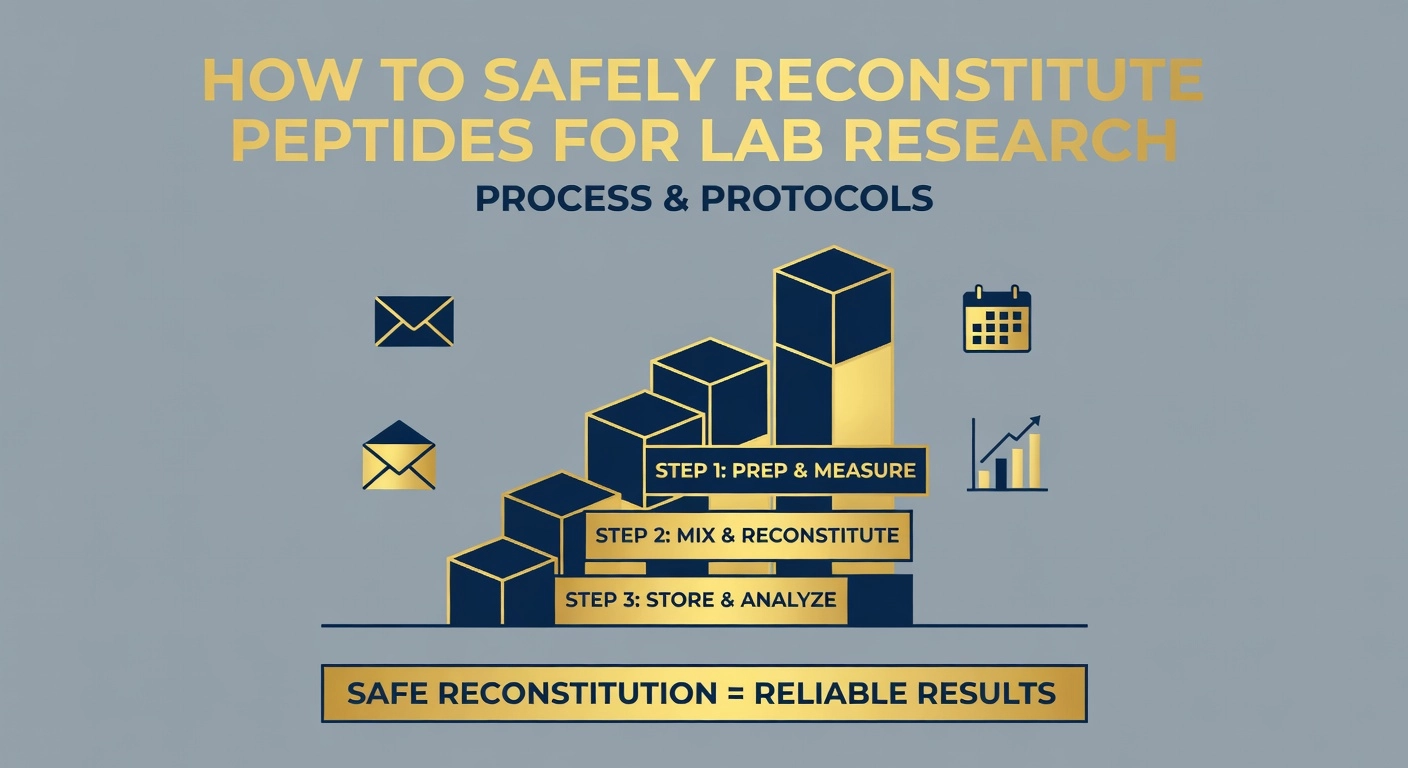
Reconstituting lyophilized peptides is a precise laboratory procedure essential for preparing high-purity research compounds, such as those offered by NorthWestPeptide, for analytical and experimental use. This process demands strict aseptic techniques to maintain peptide integrity, prevent contamination, and preserve bioactivity, ensuring results align with research-only (RUO) standards. Common solvents like bacteriostatic water (BAC water) support multi-dose stability up to 28-30 days when refrigerated at 2-8°C, while sterile water suits single-use applications within 24 hours. Following these steps minimizes errors that cause 20-60% potency loss within 48 hours, as noted in laboratory protocols. Always verify peptide datasheets for solubility specifics and use sterile equipment to uphold purity standards documented via HPLC and mass spectrometry.
Step 1: Preparation and Drawing Solvent
Begin by wiping the rubber stoppers of both the peptide vial and solvent vial with 70% isopropyl alcohol swabs to eliminate surface contaminants. Allow vials to equilibrate to room temperature for 15-30 minutes, preventing condensation that could introduce moisture or cloudiness. Select a sterile 3 mL syringe with an 18-20 gauge needle; draw air equal to your desired solvent volume, inject it into the BAC water vial to equalize pressure, then withdraw the solvent without introducing air bubbles. For example, draw 2 mL for a standard 5 mg vial, yielding a 2.5 mg/mL concentration post-reconstitution. This preparation step reduces contamination risk by up to 300% compared to needle reuse, a top error in 70% of reconstitution failures. For detailed protocols, see this comprehensive peptide reconstitution guide.
Step 2: Adding Solvent to Peptide Vial
Insert the needle at a 45-degree angle into the peptide vial and dispense the solvent slowly along the inner glass wall over 10-15 seconds. This wall-streaming method ensures gradual wetting, avoiding direct spraying onto the lyophilized powder, which can cause foaming, clumping, or shear-induced denaturation. Research indicates direct spraying contributes to aggregation in hydrophobic peptides, compromising structural integrity. Distribute evenly to promote uniform dissolution without mechanical stress.
Step 3: Gentle Mixing
Gently swirl the vial in a circular motion or roll it between your fingers for 30-60 seconds. Avoid shaking vigorously, as it disrupts peptide bonds and leads to 30-50% average potency loss through fragmentation or oxidation. Studies highlight shaking as the primary beginner mistake, affecting sensitive residues like methionine or tryptophan. If needed, repeat swirling intermittently; for recalcitrant powders, allow mild inversion.
Step 4: Sitting Period and Inspection
Let the vial sit undisturbed for 2-5 minutes to facilitate complete dissolution. Inspect under good lighting for a clear, homogeneous solution free of particles, haze, or precipitates; undissolved material may require additional gentle swirling. Confirm full clarity before refrigerating at 2-8°C to preserve ≥95% potency for 28-30 days. Cloudy solutions signal incompatibility or degradation and should be discarded. Refer to expert tips on accurate dosing reconstitution for verification techniques.
Step 5: Labeling for Lab Traceability
Label the vial with the peptide name, concentration calculated as mg/mL = total peptide mg ÷ solvent mL (e.g., 5 mg / 2 mL = 2.5 mg/mL), solvent type, reconstitution date, and expiration (typically 28 days for BAC water at 2-8°C). This documentation supports analytical reproducibility and compliance in research records. Store away from light and avoid freeze-thaw cycles exceeding three, which accelerate degradation by 10-20% per day at room temperature. Proper labeling integrates seamlessly with batch testing from providers like NorthWestPeptide, ensuring consistent experimental outcomes. For solubility insights, consult this peptide reconstitution overview.
Detailed Technique Notes
Sterile Needle and Syringe Use Always employ a new sterile needle and syringe for each vial to minimize contamination risks, which can increase by 300% with reuse according to research insights. Reusing equipment introduces microbial contaminants like bacteria or pathogens into the vial, leading to rapid peptide degradation and compromised purity essential for reliable laboratory results. NorthWestPeptide emphasizes strict aseptic techniques for their high-purity research peptides, aligning with CDC guidelines on single-use per entry. This practice preserves analytical integrity, avoiding the 20-60% potency loss seen in common reconstitution errors.
Solution Clarity Check After swirling, inspect the solution for clarity; a clear, colorless liquid confirms successful dissolution and stability. Cloudiness often indicates aggregation from improper solvent choice, pH mismatch, or impurities, signaling potential inefficacy for research applications. Discard any cloudy solutions immediately to maintain ≥95% potency over 28-30 days of refrigerated storage. For detailed clarity protocols, see complete peptide reconstitution guide.
Handling Stubborn Peptides For peptides resistant to dissolution, repeat gentle circular swirling every few minutes over 15-30 minutes, allowing time at room temperature or brief refrigeration. Avoid aggressive methods like shaking, which causes 30-50% potency loss through shear-induced denaturing, or heat, which disrupts molecular structure. Patience ensures structural integrity for accurate experimental outcomes, as supported by peptide reconstitution safety rules. Proper technique upholds research-use-only standards.
Top Reconstitution Mistakes to Avoid
Shaking Vials: The Most Common Beginner Error
Vigorously shaking peptide vials during reconstitution introduces shear stress that denatures the delicate protein structures, leading to peptide bond disruption and aggregation. According to 2026 industry analyses and research blogs, this top beginner mistake causes an average 40% potency loss, with ranges of 30-50% depending on the compound’s sensitivity. For research peptides from high-purity sources like NorthWestPeptide, which meet stringent analytical standards, such mishandling can invalidate experimental results by rendering the solution inactive. Instead of shaking, gently swirl the vial in circular motions for 30-60 seconds or roll it between your palms to promote even dissolution without mechanical damage. Allowing the mixture to sit undisturbed for 2-5 minutes further aids solubility while preserving structural integrity. Researchers report that proper gentle handling maintains over 95% potency for up to 28-30 days when refrigerated, ensuring reliable laboratory outcomes. Common peptide mistakes for beginners
Direct Solvent Spray: Foaming and Swift Degradation
Directly spraying solvent onto the lyophilized powder creates excessive foaming, which increases air exposure and oxidative stress, resulting in 20-60% potency drops within 48 hours. This error clumps the powder unevenly, complicating full dissolution and accelerating degradation in research solutions. In laboratory settings, where precision is paramount for analytical documentation, foaming also alters pH stability, compromising compound purity. To avoid this, draw bacteriostatic water into a sterile syringe and release it slowly along the inner vial wall over 10-15 seconds, allowing gradual wetting of the powder. This technique minimizes bubbles and shear forces, as emphasized in current expert protocols for research-use-only (RUO) peptides. Clear, foam-free solutions post-reconstitution indicate success, supporting consistent experimental replication.
Wrong Solvent or Needle Reuse: High Contamination Risks
Seventy percent of reconstitution failures stem from five key errors, including using incorrect solvents like plain sterile water instead of bacteriostatic or reusing needles, which spikes contamination risks by 300% through coring and bacterial introduction. Incompatible solvents lack preservatives, leading to rapid microbial growth and degradation unsuitable for multi-dose research vials. Needle reuse introduces rubber particulates and residues, undermining the purity standards essential for NorthWestPeptide’s laboratory-grade products. Always select bacteriostatic water for extended stability (up to 28 days refrigerated) and employ fresh, sterile insulin syringes (U-100, 0.3-1mL) per operation in a sanitized workspace. Label vials with concentration, date, and expiration to track integrity. These practices prevent the rapid breakdown seen in contaminated samples, preserving analytical reliability.
Room Temperature Storage: Accelerated Daily Losses
Storing reconstituted peptides at room temperature triggers hydrolysis and oxidation, causing 10-20% potency loss per day and dropping below 50% after 72 hours without refrigeration. Heat and light exacerbate these processes in fragile solutions, far outpacing the stability of lyophilized powders. For research applications demanding high fidelity, immediate transfer to 2-8°C (36-46°F) is critical, avoiding freeze-thaw cycles that form damaging ice crystals. Aliquot into single-use volumes if frequent access is needed, and discard after power outages exceeding 24 hours. Proper cold storage aligns with RUO guidelines, enabling weeks of viable use backed by batch documentation. Rookie mistakes in peptide research By sidestepping these pitfalls, researchers maximize the value of premium peptides in their protocols.
Post-Reconstitution Storage Best Practices
Refrigerate Immediately at 2-8°C (36-46°F)
After successful reconstitution, transfer the peptide solution to refrigeration at 2-8°C without delay to halt degradation processes like hydrolysis and oxidation. This standard laboratory condition preserves at least 95% potency for 28-30 days when using bacteriostatic water and sterile techniques, as supported by peptide stability studies. For instance, sequences prone to deamidation, such as those with asparagine or glutamine residues, show minimal activity loss under these controls, while room temperature exposure can cause 10-20% degradation daily. Beginners should monitor fridge temperature with a calibrated thermometer to ensure consistency. Proper refrigeration aligns with research protocols, enabling reliable analytical results over the storage period.
Avoid Freeze-Thaw Cycles
Freeze-thaw cycles promote peptide aggregation and structural denaturation through ice crystal formation, leading to significant activity loss that can exceed 30% after just a few repetitions. To mitigate this, aliquot reconstituted solutions into single-use volumes, such as 50-100 µL portions in sterile tubes, before freezing at -20°C or -80°C for extended storage beyond 30 days. Thaw each aliquot only once under controlled conditions, discarding any remainder to maintain purity. Research from sources like Sigma-Aldrich highlights that even one cycle may introduce minor clumping, but multiples drastically reduce efficacy in experiments. This practice is essential for multi-experiment workflows in laboratory settings.
Labeling and Documentation
Meticulous labeling prevents errors and supports traceability in research. Clearly mark each vial or aliquot with the peptide name, batch number, reconstitution date, solvent volume, final concentration (e.g., 5 mg/mL), calculated expiry date (typically 28-30 days from preparation), and storage conditions. Integrate this into lab notebooks or digital systems for HPLC purity tracking and GLP compliance. For example, documenting a 2 mL reconstitution of a 5 mg vial yields 2.5 mg/mL, guiding precise analytical use. Such records ensure reproducible outcomes and facilitate stability assessments.
NorthWestPeptide recommends adhering to batch-specific Certificate of Analysis (COA) guidelines, which detail verified purity levels often exceeding 99% and tailored storage for optimal research-grade performance. Their third-party tested products emphasize cool, dry conditions post-reconstitution to sustain consistency in laboratory applications. Always consult the provided COA for sequence-specific advice.
Actionable Takeaways for Peptide Researchers
Always prioritize aseptic technique and strict Research Use Only (RUO) compliance in every peptide reconstitution process to preserve experimental integrity and prevent contamination risks that can escalate by 300% with needle reuse. Meticulous handling ensures reliable data in laboratory settings, aligning with purity standards upheld by suppliers like NorthWestPeptide.
Follow the outlined steps precisely to retain ≥95% potency for 28-30 days under refrigeration, sidestepping the 70% of common failures from errors like shaking or direct solvent spraying, which cause 30-50% average potency loss through denaturing. Invest in high-purity peptides verified via Certificates of Analysis (COAs) from trusted sources such as NorthWestPeptide, guaranteeing consistency for analytical work.
Regularly consult established lab protocols and incorporate insights from 2026 stability research to refine techniques amid evolving trends. Next steps include practicing with small batches, meticulously documenting concentration calculations and outcomes, and leveraging NorthWestPeptide resources like batch search tools or quote requests for advanced analytical support. This approach empowers beginners to achieve reproducible results in peptide research.
Conclusion
Reconstituting peptides safely is straightforward when you focus on these essential takeaways: choose the appropriate solvent for stability, calculate volumes precisely to avoid errors, apply sterile techniques to prevent contamination, and store solutions correctly for long-term viability. By following this guide, you eliminate common pitfalls, protect your valuable materials, and ensure your experiments deliver trustworthy data.
This beginner-friendly approach empowers you to unlock peptides full potential in your research. Take action now: gather your supplies, review these steps one more time, and reconstitute your next peptide with confidence. Your innovative discoveries in biological processes and therapies are within reach. Start today, and watch your lab results transform.